Rama, Fayez, Yanal, and the others: how a school in Gaza keeps children’s hope alive
di Eman Abu Zayed, Gaza City
The Latin Patriarchate school in Gaza City welcomes one thousand Christian and Muslim students. The trauma of war and the conditions in which their families live hinder the learning process. "I want to reclaim my right to learn." "I wish for the conflicts to end, so I can return to a normal life and plan my future"

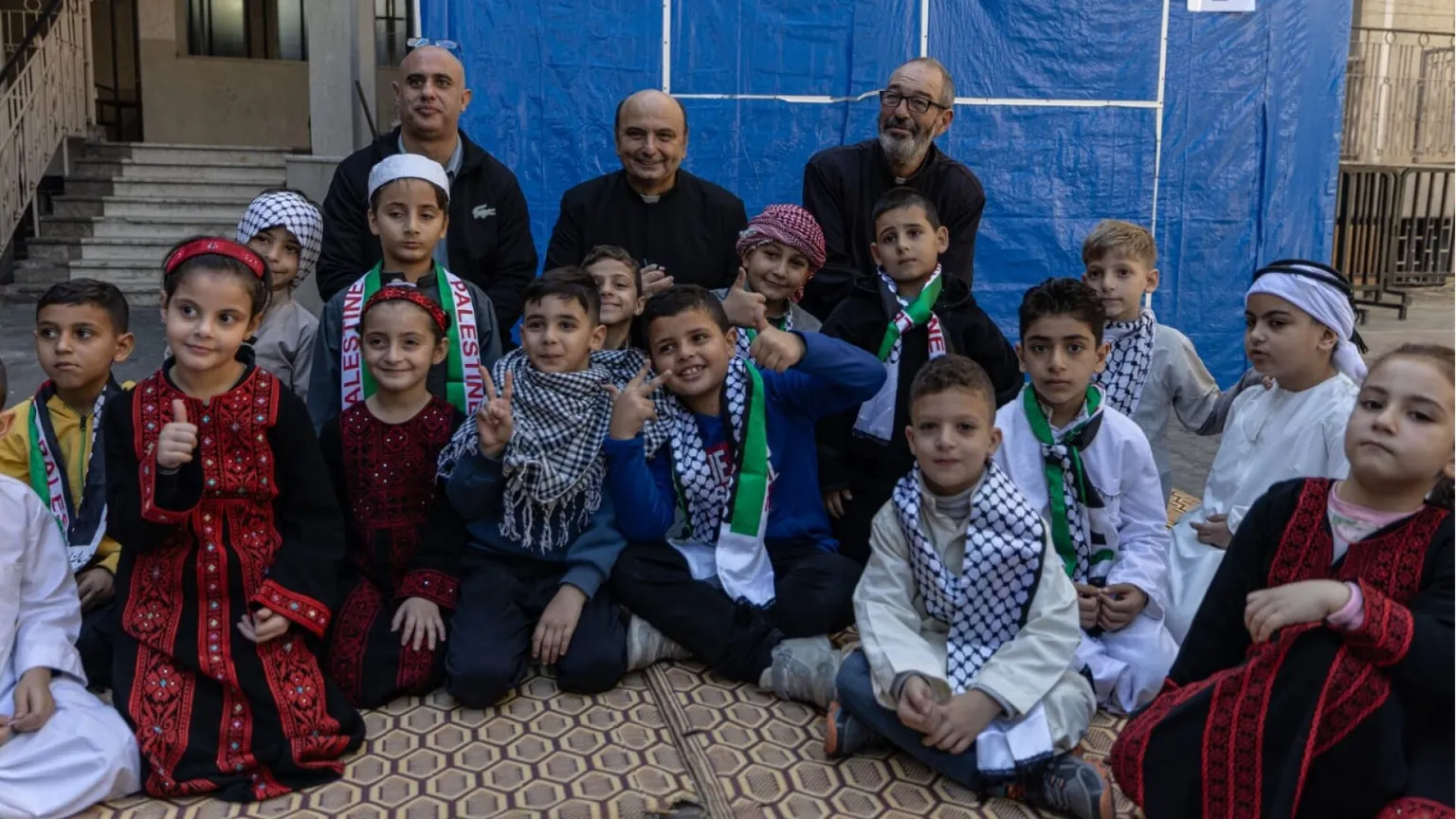
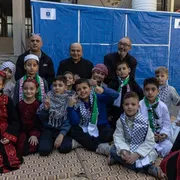
As soon as the buses stopped outside the Latin Patriarchate School in Gaza, the children began stepping out, visibly excited, and making their way towards the schoolyard, which had been decorated in a traditional Palestinian style. The day was dedicated to celebrating Palestinian heritage. The girls wore embroidered traditional dresses, while some of the boys wore traditional robes, bringing an atmosphere of Palestinian customs and folk celebrations to the school.
In the courtyard, the students gathered alongside Father Gabriel Romanelli and several teachers around different stations prepared for the occasion. There was a traditional saj griddle and a hand-operated mill for preparing food, alongside olive oil, za’atar, cheese and vegetables. Traditional Palestinian and folk songs played throughout the schoolyard, turning the space into a gathering where children could connect with their cultural heritage and popular traditions.
The school began its first academic year with around 200 students, before gradually expanding to welcome children from the surrounding neighbourhood and provide them with a safer learning environment. Father Gabriel Romanelli says: “We managed to save the 2024–2025 academic year, completing it with 462 students.” As conditions improved somewhat, the school administration made use of every available space in the building, converting every possible corner into a classroom. It also rented a villa to serve as a kindergarten, bringing the total number of children benefiting from the school and kindergarten to approximately 1,000.
The school welcomes both Muslim and Christian students, following an educational tradition that dates back to its establishment. Father Gabriel explains that the school ensures every student has the opportunity to learn about their own religion. Muslim students attend Islamic education classes taught by specialised teachers, while Christian students receive Christian religious instruction from qualified teachers.
“The school’s philosophy is based on respecting the religion of every student. Every child has the right to learn about their faith and practise their religious identity freely and with respect", he says. He adds that this diversity reflects the fabric of Palestinian society, emphasising that Palestinian Christians are an integral part of its history and community. Human dignity and respect for others are also central to the educational values the school seeks to instil in its students. Father Gabriel explains: “Every human being is created in the image of God and possesses freedom, dignity and personal will. Therefore, every person has rights that must be respected”. He adds that the school works to instil these values in students and their families, encouraging them to respect differences and recognise the dignity of every individual, both inside and outside the school.
Psychological and social support also play an essential role in the school’s educational approach, as it seeks to provide children with an environment where they feel safe and a sense of belonging while continuing their education. Jeries Darcy, the school’s deputy head, explains that some children started attending school at an early age after spending their first years in circumstances that deprived them of the experience of normal school life.
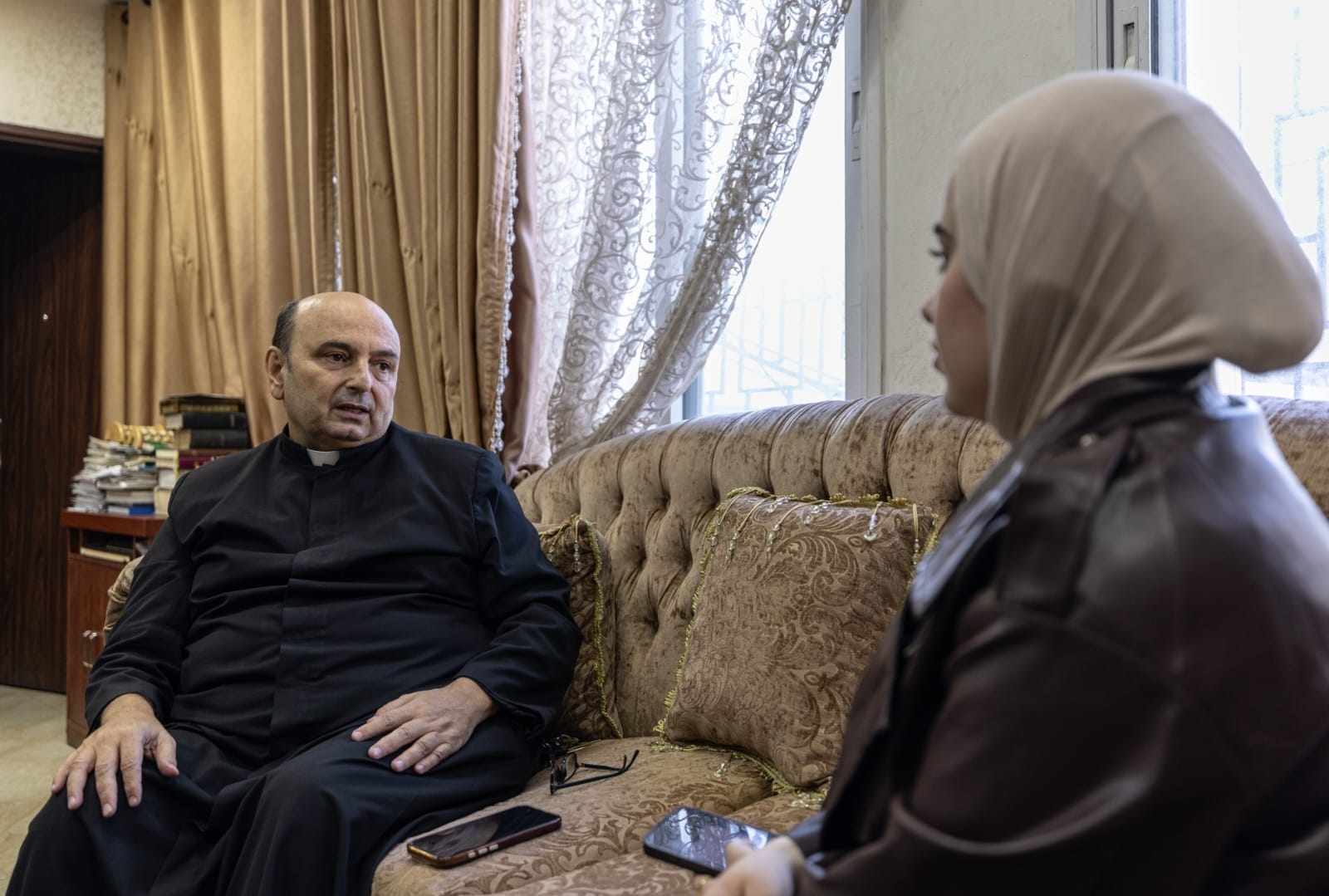
“We care about the student as a human being before we focus on their academic performance. School is not a place where a child is forced to learn, but a place where they come to feel safe and consider it their second home,” Darcy says. With this approach in mind, the school has incorporated play and interactive activities into the learning process, organising activities that help children release emotional stress and express their feelings. “We also try to bring joy into education,” Darcy explains, noting that the school develops schedules and activities combining learning with psychological support, while arranging individual follow-up sessions with specialists for children who require additional attention.
This support also extends to students’ families. The school regularly organises meetings with parents to discuss their children’s needs, whether related to their psychological well-being, academic performance or learning gaps. Addressing learning loss remains another major challenge for teachers. Darcy explains that the school uses assessment tests to identify students’ academic levels, groups them according to their needs and abilities, and develops academic plans to monitor their progress.
Across the Gaza Strip, education continues to face major challenges as the 2026–2027 academic year gets underway. According to the United Nations Office for the Coordination of Humanitarian Affairs (OCHA), approximately 570,000 children were enrolled in temporary learning spaces as of September 2026, while an estimated 200,000 children remained outside any form of structured education. In addition, 526 out of 564 schools require either complete reconstruction or major rehabilitation before they can be used again, according to education-sector data cited in the office’s update published on 4 November 2026.
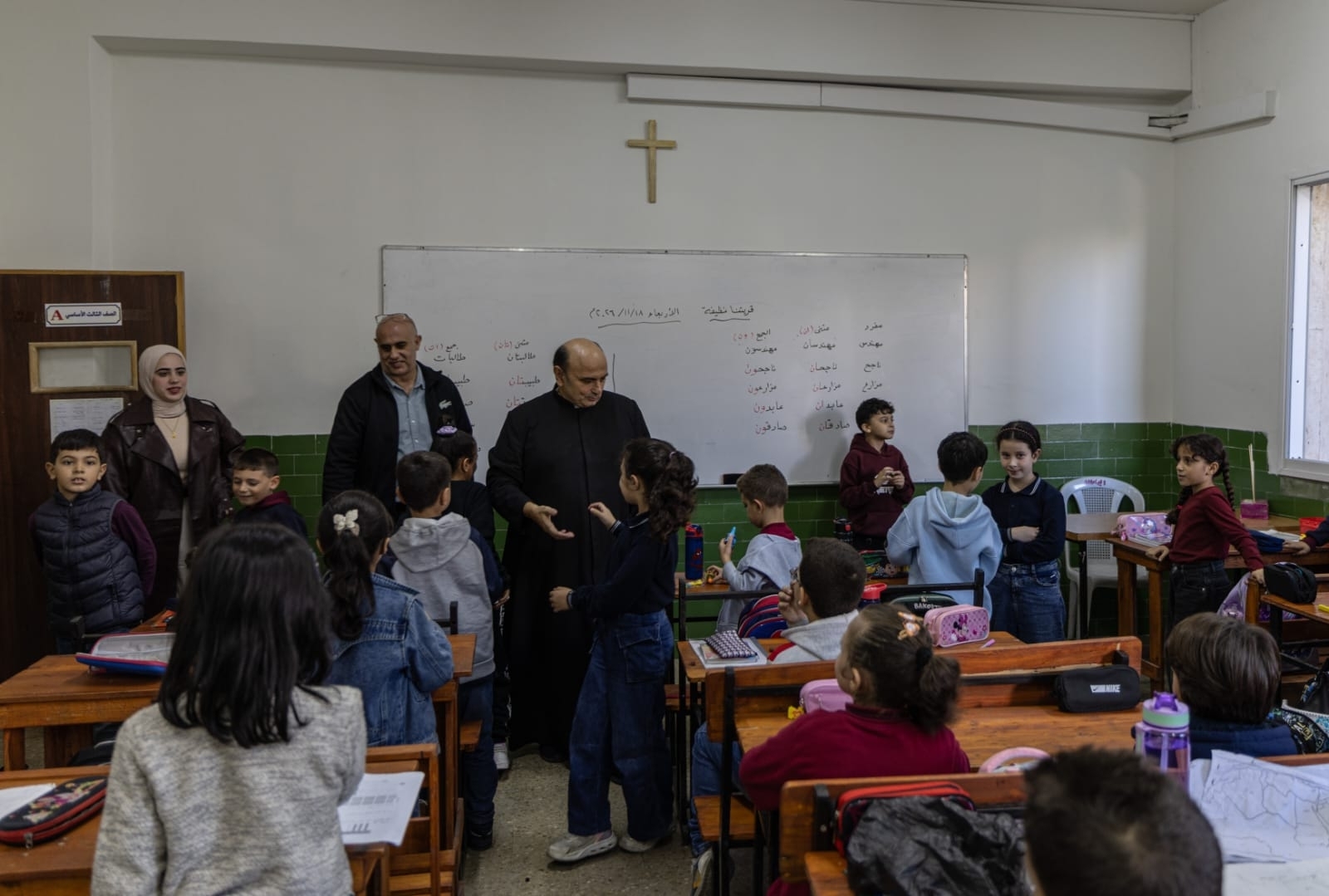
Raja Al-Shawa, a teacher at the school, describes teaching during the war as an exceptional and extremely difficult experience that affected both students’ and teachers’ ability to continue the educational process. Both faced daily challenges, including shortages of educational materials, electricity cuts and limited access to water, alongside harsh humanitarian conditions that affected concentration and learning in the classroom. “Concentration, comprehension, learning and benefiting from lessons were all extremely difficult. Even teachers faced challenges in carrying out their work because of the tension, fear and surrounding circumstances”, Al-Shawa says.
The Latin Patriarchate School in Gaza worked to provide the basic requirements for continuing education, including clean water, electricity, classroom lighting and educational materials, as well as securing teachers and covering their salaries. Al-Shawa explains that working with children required teaching methods that took their psychological well-being into account. “Because the children were living in a constant state of fear and anxiety, we had to deal with them with great sensitivity and care, avoiding violence or any methods that could hurt their feelings or affect their physical and psychological well-being”, she says. Teachers adopted active learning methods, using colours, songs, games, simulations and direct interaction between students and teachers to make lessons more engaging and help children concentrate and understand. “We made a tremendous effort to develop our teaching methods and use educational approaches suited to children’s needs and abilities during the war,” Al-Shawa adds, noting that the school has begun to see gradual improvements in students’ learning and academic performance.
Student Fayez describes the changes in his school life and the difficulties he continues to face in pursuing his education after the war. He points out that living conditions directly affect students’ ability to study, as many families continue to live in shelters that lack quiet and suitable spaces for studying and concentration. “Many students often have no designated place to study or quiet space where they can concentrate and follow their lessons. This affects their academic performance and their ability to continue their education,” Fayez says. He adds that the past three years have left significant learning gaps among many students as a result of interrupted schooling, school closures and difficulties accessing regular educational institutions. “We are now trying to make up for the education we lost over the past years, overcome the gaps that have accumulated in our school subjects, and regain the skills and knowledge we missed,” he says. Fayez believes that the school’s continued efforts to welcome students and help them complete their education give them an opportunity to continue studying and look towards the future. “Despite the difficult living conditions we are going through, we hope to regain our right to education and build our future,” he adds.
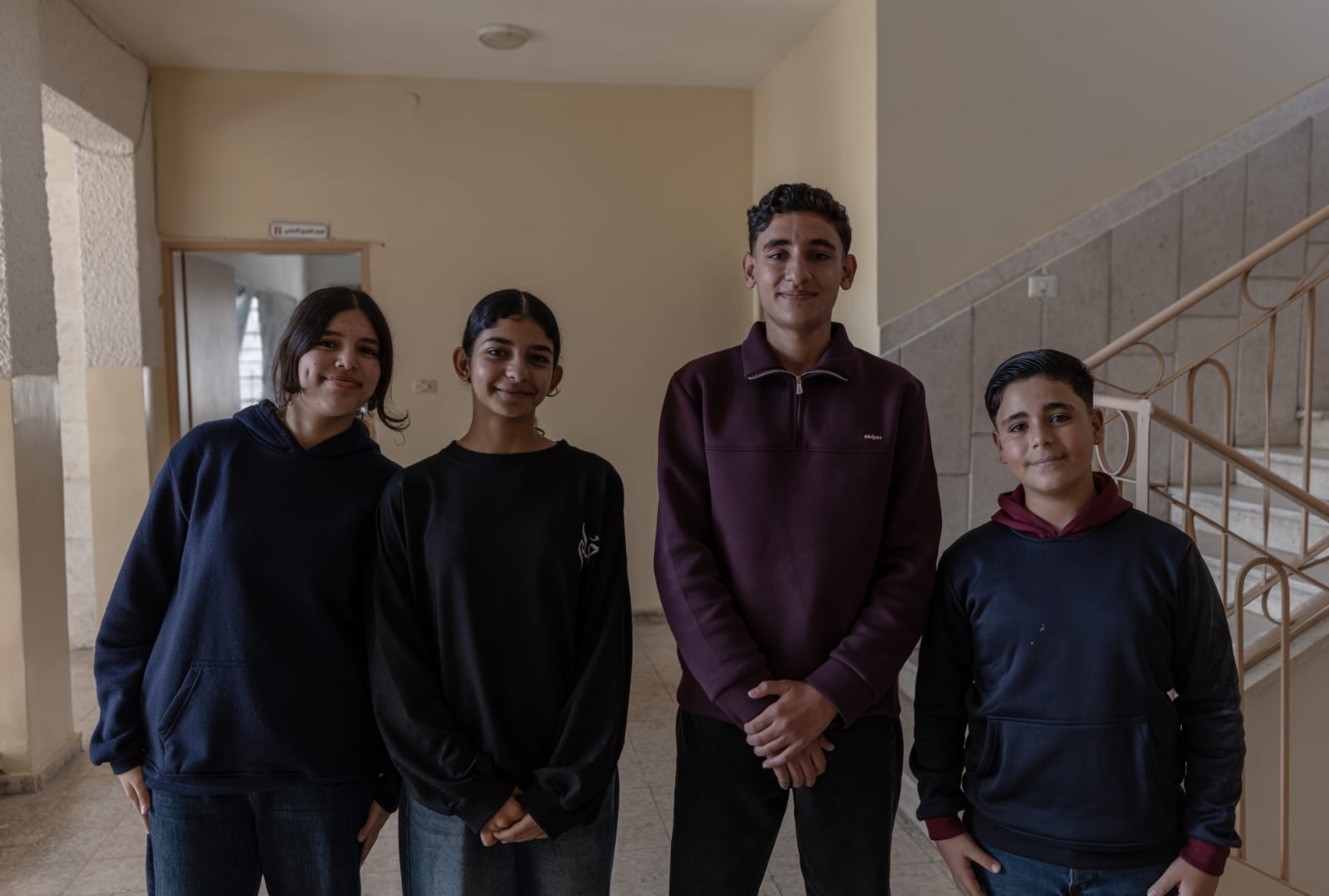
Student Rama also speaks about her educational experience during the war, explaining that continuing her studies was her greatest challenge. “Despite all the difficult circumstances we went through during the war, the biggest challenge for me was continuing my education and keeping up with my studies. I hope my school will return to the way it was, that it will be a safe and beautiful place, and that we can all live in peace and security. I hope the wars will end so that we can return to our normal lives and achieve our dreams,” she says. Rama’s hopes reflect the children’s attachment to their school and their desire to regain a school life that allows them to learn, meet their friends and look towards the future.
When student Yanal speaks about his hopes for the future, two wishes stand out: safety and the opportunity to continue his education. “My dream after the war is to live in safety and have a home where I can feel stable, without having to experience fear and anxiety again. I also hope to earn a school certificate that will help me succeed in life and give me the opportunity to build a better future,” he says. Yanal’s words capture the hopes of many children who long for a stable life and the opportunity to continue their education and fulfil their dreams.
© RIPRODUZIONE RISERVATA
 Seguici anche su Google Discover di Avvenire