From Hiroshima to Gaza: a Nobel Prize for all the children who ask for peace
No one Is a “collateral damage.” From Hikmet’s poetry to the rubble of Gaza, a nomination for the Nobel Prize on the day dedicated to celebrating the rights of the youngest

“I’m at your door Madam, Sir,/ to ask you for your signature./So that children don’t get killed/so that they can even eat sweets” – this is the plea made by "The Little Girl" (known also as "The Girl of Hiroshima"), a poem by Nâzım Hikmet from 1956, inspired by a little girl, Sadako Sasaki, who died a year earlier, in 1955, of leukaemia, as a result of the radiation she was exposed to in 1945 when the bomb was dropped on the city of Hiroshima. A "side effect" of a war to be ended at any cost, even that unspeakable cost. Hikmet died at the age of seven, at the moment of the explosion – the age she will remain forever in the eternal present from which she speaks to us in his verses. A little girl who knocks “on the doors,/one by one, on every door./I can’t be seen to your eyes/dead children can’t be seen […] I’m not here to ask you/to do anything for myself./A burnt child/can’t even eat sweets”.
Please sign the petition, for the Nobel Peace Prize for the children of Gaza, as Hikmet’s "The Girl from Hiroshima" asks us to do. So that the children of Gaza – those still alive – may still be able to "eat sweets", hold onto the dream of living whilst they are still alive, have a desire to grow up, study, watch over their own children when they have them, and return home without fear, books under their arms, before going out to play in the courtyards. She is asking for this prize on their behalf, not for those who have been killed, because for those who were burnt to ashes, reduced to dust even before the dust settled beneath the rubble of their homes, nothing is of any use anymore. Perhaps it serves only to restore our dignity, so that we may once again be human beings and stop killing them for the sake of our wars. The wars of the grown-ups, which are never the wars of children. Children do not carry war in their hearts: war takes their hearts away, burns them, makes them stop beating.
The little girl from Hiroshima, whose flesh was scorched in 1945 before she died of leukaemia a few years later – to whom Hikmet lends his voice – asks us to sign this nomination for the Nobel Peace Prize on behalf of the children of Gaza, not just for their sake, but for all the childhoods that war has snuffed out, and will continue to snuff out, unless we are able, riding the wave of moral indignation that becomes the diplomacy of the people, from the grassroots up, in Italy, in Europe, to work for peace, so that childhood may never again be relegated to the aberrant political-military category of ‘collateral damage’ to legitimise their murder. An obscene hypocrisy designed to absolve the murderers in the eyes of the world, to dilute – for those who are willing to believe it – the absolute evil of the murder of a child, of the extermination of innocent children, who are incapable of harming anyone, and whom even the laws of war, in a burst of dignity and a sense of honour, forbid us to kill.
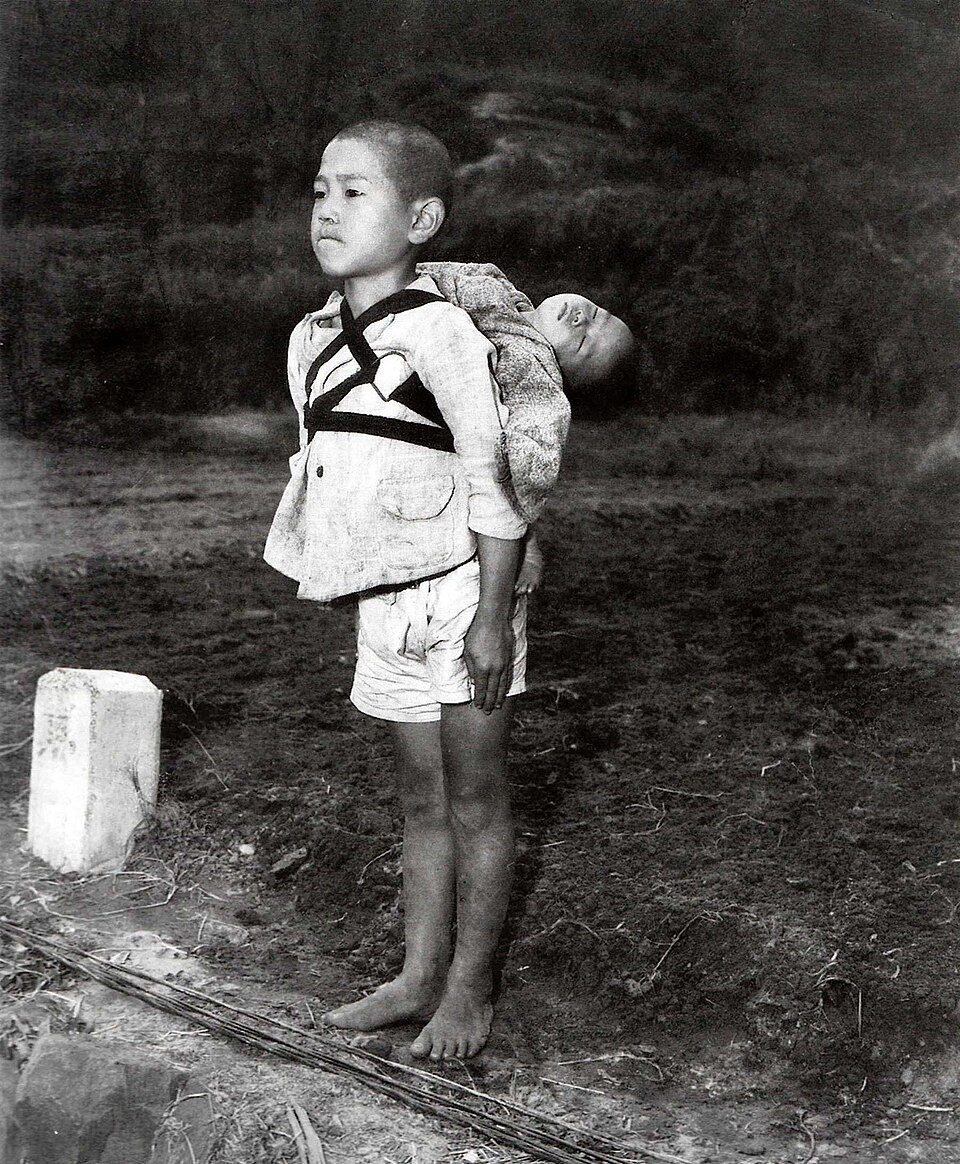
Look at these photos. The child from Nagasaki, queuing outside a makeshift crematorium, waiting for his turn to hand over his little brother’s body to the pyre.
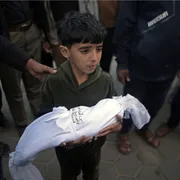
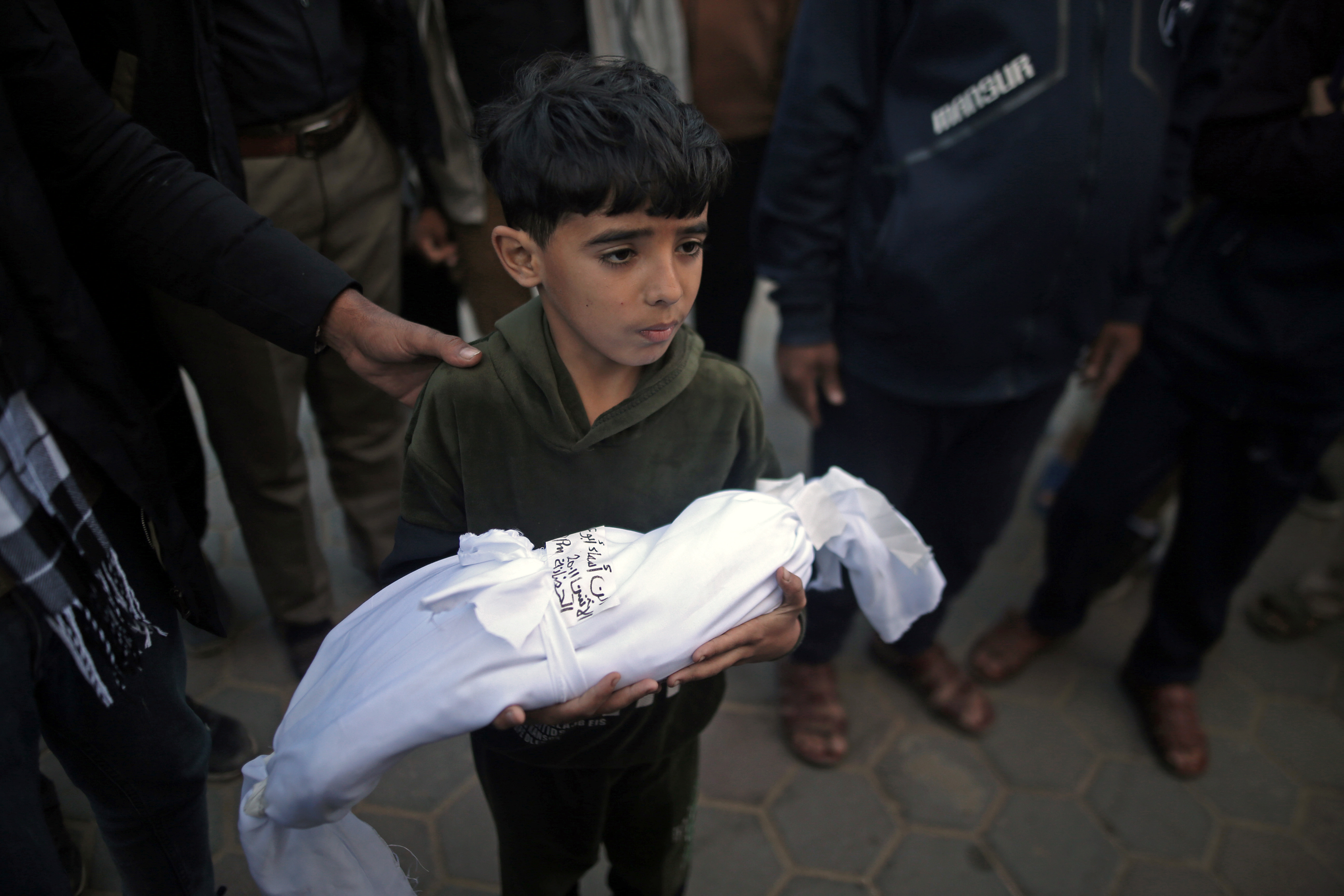
The child from Gaza, handing over for burial the bundle – a sheet, or rather, a scrap of a sheet, as that is all that is needed – containing his little brother who was killed. Look at the photograph of Kfir Bibas, nine months old, killed whilst in captivity along with his mother and older brother following the Hamas attack on 7 October 2023. Look.
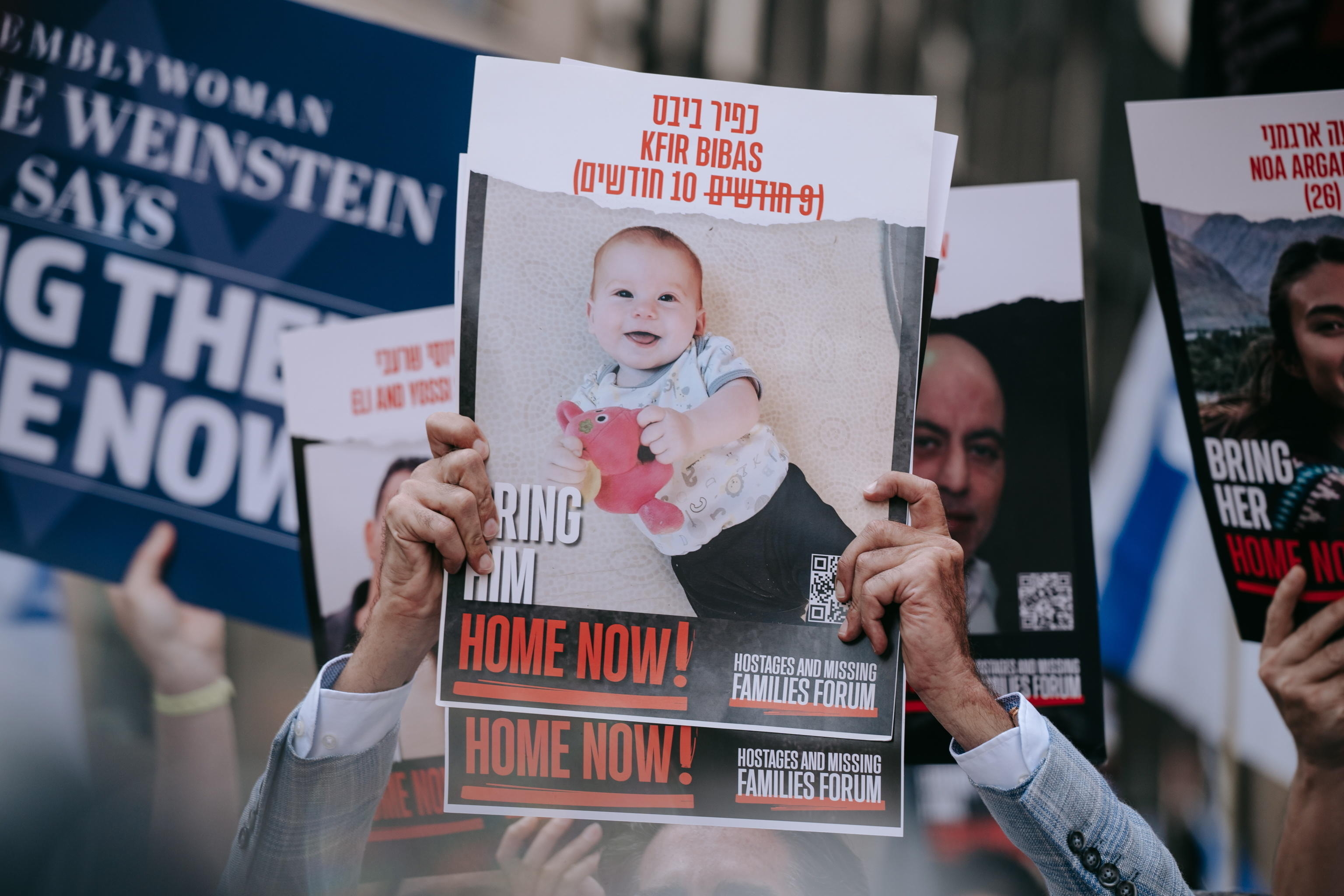
And read the poem by Hikmet and the voices from the Holy Land speaking to us of the right of the children of Gaza and the West Bank to live, grow up, play and study in their own land in peace, and to be brought up in the spirit of peace. But not just them. All the children in Palestine – Arabs, Jews and Christians. But what is the point of them having to live in hatred and be brought up to hate, raised to pass it on from father to son? What is the point of them living like this, with death ever-present – whether inflicted or suffered – every single day? Look at these photos, and read Hikmet, and these pages from "Avvenire". And sign the petition for the Nobel Peace Prize to be awarded to the children of Gaza – let it be given to someone who has worked on their behalf and is enabled to continue doing so. And there are many such people, fortunately. Listen to the little girl from Hiroshima, who is dying today in Gaza. Do not let children who have died write any more poems.
The Little Girl
It’s I knocking on the doors,
one by one, on every door.
I can’t be seen to your eyes
dead children can’t be seen.
one by one, on every door.
I can’t be seen to your eyes
dead children can’t be seen.
Some ten years have gone past
since I died in Hiroshima.
I’m still only seven-
dead children don’t grow up.
since I died in Hiroshima.
I’m still only seven-
dead children don’t grow up.
My hair caught fire first
then my eyes burned, scorched.
I turned into a handful of ash,
then my ashes were blown into the air.
then my eyes burned, scorched.
I turned into a handful of ash,
then my ashes were blown into the air.
I’m not here to ask you
to do anything for myself.
A burnt child
can’t even eat sweets.
to do anything for myself.
A burnt child
can’t even eat sweets.
I’m at your door Madam, Sir,
to ask you for your signature.
So that children don’t get killed
so that they can even eat sweets.
to ask you for your signature.
So that children don’t get killed
so that they can even eat sweets.
"The Little Girl" (Nâzim Hikmet), translation: Cahit Baylav on website Nâzim Hikmet Kültür ve Sanat Vakfi.
© RIPRODUZIONE RISERVATA
 Seguici anche su Google Discover di Avvenire