The women who hold up rural healthcare in india
di Redazione
Social and healthcare workers and the strain of working in rural communities, and the government's neglect in denying them protection, rights and adequate pay

At five in the morning in Paswara village, Mahoba district, Asha Shukla is already on the move. She is not just any ASHA worker. She is the district president of ASHAs in Mahoba and has been working in public health for over a decade. Her day begins with a list of pregnant women to check on and ends well past dusk, after she has escorted patients, monitored newborns, and resolved disputes between villagers and clinics.“We are always the first to reach and the last to leave,” she says. “But when we ask for rights or recognition, we are told we are just volunteers”.
Across Uttar Pradesh and the country, women like Asha Shukla form the foundation of rural healthcare, not with fanfare or funding, but through sheer endurance. They are nurses, educators, ambulance-finders, health-data collectors, and emergency responders rolled into one. Yet, their work is consistently undervalued.
India’s rural healthcare system leans heavily on over 1.04 million ASHA workers, who cover around 75 percent of the country’s rural population. Despite their contributions, they remain poorly paid, with no job security, fixed income, or basic safety.This story explores the lives of five ASHAs from different corners of Uttar Pradesh. Together, they reflect a shared truth: the country’s healthcare outcomes are held up by women whose work is invisible, unsupported, and deeply exploited.Who Are ASHA Workers?ASHAs, or Accredited Social Health Activists, were introduced in 2005 under the National Rural Health Mission (now part of the National Health Mission). They were envisioned as women from the community who would connect rural households with government health services.

Each ASHA is responsible for 1,000 to 2,500 people, depending on the region. As per NHM guidelines, their job is to promote maternal and child health, monitor vaccinations, escort patients to hospitals, and ensure communities are educated about hygiene, nutrition, and disease prevention. "Often, I end up spending my own money to take patients to hospitals or buy them medicines. No one reimburses us, not for the transport, not for the treatment. It's like the system expects us to pay to do our jobs,” says Asha Shukla. Today, ASHAs make up the world’s largest community health workforce. But they are still classified as ‘volunteers’, which means no guaranteed salary, no benefits, and no worker protections.
In Chitrakoot, 45-year-old Renu Pandey has worked as an ASHA since 2006, covering a population of 1,122. She wakes up at five in the morning and meets around 20 to 25 women each day. Some need antenatal checkups, others are mothers with newborns. She monitors children’s weight, checks fevers, follows up on recovery from diseases, and delivers medication for TB patients for months on end.“Sometimes we have to arrange deliveries at night. We go alone, walking in the dark. We’re scared, but there’s no help,” she says. “There’s no protective gear, no transport, nothing. If someone has TB, we check on them for six months. If they miss a dose, we are blamed”.
Sunita Soni, another ASHA from Chitrakoot, is 44 years old. Her day is no different, long hours, constant walking, endless paperwork. “We don’t have scooters or proper roads. We carry our registers, our bags, our own umbrellas in the heat. And still, some people yell at us, saying we’re not doing enough".
In Ayodhya, 38-year-old Kanchan works in Ahmedabad village, Rudauli block. She travels through narrow lanes to reach isolated homes. “If someone has a fever, we’re the first they call. If a pregnant woman needs to be taken to the hospital, we have to arrange everything. Even transport,” she says.Geeta Devi, who works in Basudevpur village, Bikaapur block, says her role is critical but rarely acknowledged. “People in the village trust us more than they trust hospitals. But that trust doesn’t translate into support or safety”.

Expanding Role, Shrinking Support
Since its launch in 2005, the role of ASHA workers has grown far beyond its original scope. Today, they are not only health mobilisers but also data collectors, app users, and frontline epidemiologists.In addition to their core tasks— monitoring maternal and child health, tracking malnutrition, escorting patients, they now handle chronic illness follow-ups, community awareness campaigns, and digitised reporting.
During the COVID-19 pandemic, ASHAs formed the frontline of India’s public health response. They checked on symptomatic patients, delivered medicines, and ensured quarantine compliance- often without any protective equipment or extra compensation.
Post-pandemic, the push for digitalisation has deepened. ASHAs are now required to log their work on the MDM 360 Shield app, developed as part of the government's efforts to track and manage maternal and child health services more efficiently. However, in practice, this has increased the burden on workers.
Many ASHAs now find themselves inputting the same data twice: once on the app, and again in the physical registers, as required by block-level supervisors“.
There is no choice. We fill the register by hand, and then again in the app. Both have to be perfect,” says Kanchan from Ayodhya. “The app crashes, the network fails and we get blamed”.
Internet expenses are also borne personally. “The app doesn’t work without mobile data,” says Sunita from Chitrakoot. “I pay for my own phone bill. No one reimburses us”. In some villages, ASHAs face harassment for using their phones late at night to finish daily data entries. “People question us”, says one worker. “They say, ‘What are you doing on your phone at this hour?’ For them, it becomes a question of our character”.
The Pay Problem
ASHAs are paid through a performance-based incentive model. The central government offers 2,000 rupees per month for eight core tasks. For additional work, they receive small amounts: 300 rupees for each institutional delivery, 100 rupees for escorting a patient, 150 for post-sterilization follow-up. But payments are often delayed, inconsistent, and nowhere near enough. Most ASHAs earn between 3,000 to 6,000 rupees a month, despite working full-time hours. “We work eight to twelve hours a day. How can anyone live on four thousand rupees a month?”, says Sunita.
“We go out in heatwaves, during floods, even at night. But the payment is always uncertain.”Policy Gaps and Structural ChallengesThe classification of ASHAs as ‘volunteers’ shields the state from providing fixed wages, maternity leave, pensions, or insurance. This reflects a deeper problem - care work done by women is systematically undervalued. Only a few states such as Andhra Pradesh, Kerala, Karnataka, Haryana, West Bengal, and Sikkim provide fixed payments. In most others, including Uttar Pradesh, ASHAs continue to work without recognition as formal workers. “There is no holiday. No leave. Even if we fall sick, the work doesn’t stop”, says Kanchan. “But the government still does not treat us like employees”.
According to a survey conducted by All India Central Council of Trade Unions, most dispensaries where ASHAs report to in Delhi, do not have a working toilet for the ASHAs to use.
Resistance and Demands
In recent years, ASHAs have begun pushing back. During COVID and state elections, thousands protested across India. They demanded fixed salaries, better working conditions, recognition as workers, and health insurance.
Asha Shukla, the district ASHA president in Mahoba, says their demands are not extraordinary. “We are not asking for favors. We are asking to be treated as the workers we already are”, she says. “We do the government’s job. We meet all the targets. Why are we still invisible in the system?”.
Public health experts have long argued that India's healthcare outcomes rest on the unpaid labour of women. "ASHAs are essential to the functioning of India’s health system", says a health policy researcher in Delhi. "But their invisibility in budgets and policies reflects how much our system takes women’s work for granted. "Some health officers argue that incentives are meant to ensure accountability. But even they acknowledge the system’s failure to keep up with the realities on the ground. "ASHAs deserve better. That is no longer a question," one officer admitted.
Back in Chitrakoot, we ask Renu Pandey whether she would want her daughter to become an ASHA. “I want her to help people,” she says. “But not like this. Not with this struggle, this fear, and this uncertainty".
Across India, ASHA workers continue to be the most dependable and present force in rural healthcare. But until they are given dignity, protection, and fair compensation, India risks breaking the very system that keeps its most vulnerable alive.
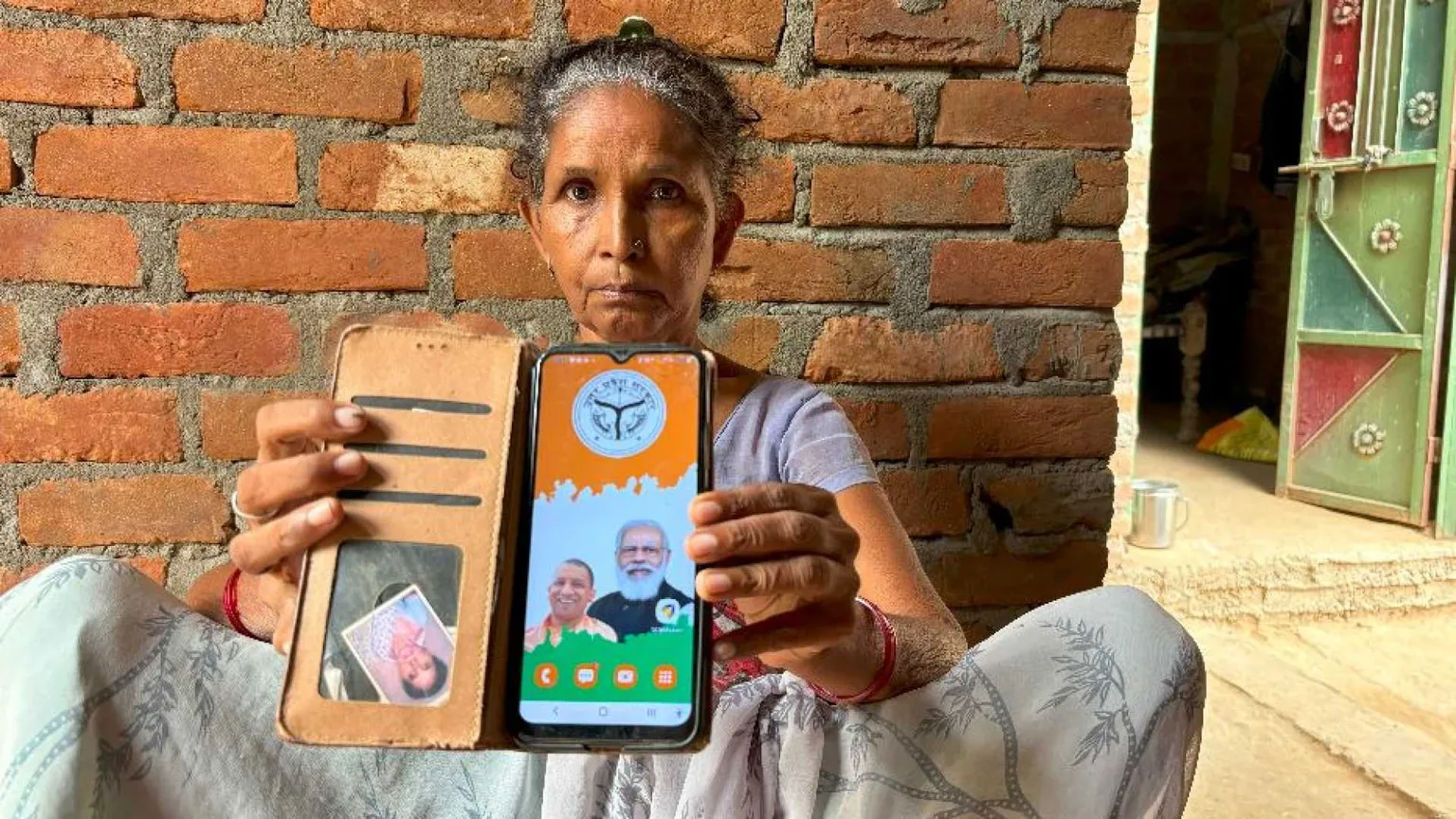
45-year-old Renu Pandey has worked as an ASHA since 2006, covering a population of 1,122. An ASHA’s work spans maternal care, disease prevention and health education. The physical register maintained by the ASHA is titled ‘ASHA’s Diary’ and records daily health visits and tasks. A detailed breakdown of the data ASHA workers record for children, including weight, age, body temperature, and other vital health indicators. An ASHA updates the MDM 360 Shield app, used to log daily health data like child weight, vaccination status, and maternal care An ASHA fills out the Mother and Child Protection (MCP) card during routine check-ups to track the child’s growth, vaccinations, and overall health. Government-issued smartphones given to ASHA workers display images of Prime Minister Narendra Modi and Uttar Pradesh Chief Minister Yogi Adityanath on the home screen.
Khabar Lahariya, the all-female newspaper that reports on life in remote Indian villages, challenging gender stereotypes
Khabar Lahariya is the only independent media outlet in India run entirely by women. It was founded as a print newspaper in Chitrakoot in 2002, offering stories and insights into the local reality of rural communities. Articles are written from a predominantly feminist perspective in very simple language and, in some cases, in dialect. Over the years, it has become a benchmark for investigative journalism in the region and an authoritative source of news from the most remote areas of the country, which are often neglected by the media. Today, it also offers its readers (around 20 million people) cultural and entertainment content. Khabar Lahariya employs 25 female journalists from different social and religious backgrounds, residing in six states in northern India. The reporters are committed to bringing a feminist perspective to the now exclusively digital coverage of rural India in order to affirm the role of women in small towns and villages. The broader vision of the publication, which joined the Chambal Media group in 2019, is to cultivate independent, inclusive and grassroots journalism to empower marginalised communities and give a voice to ordinary people who would otherwise be ignored. During the Covid pandemic, it helped to raise awareness of the risks associated with the coronavirus, which was virtually non-existent. In 2018, it launched an initiative to give a voice to women forced to remain silent about the sexual harassment and violence they suffered, giving rise to the #RuralMeToo movement. There have been threats related to questioning the status quo and gender stereotypes. Three years ago, she launched the Chambal Academy, a platform to train the new generation of digital journalists in rural India. The courses, designed for those with little or no expertise in the field, include insights into how to recognise and understand the dynamics of gender, caste and patriarchy in Indian society.
© RIPRODUZIONE RISERVATA
 Seguici anche su Google Discover di Avvenire