Afghanistan, brides against their will. Who will dry Yasmin's tears?
di Redazione
The ban on attending school and poverty lead families to sell their daughters. Safiqa, 14 anni, says: «My father didn't care that the man who asked for my hand was his own age»
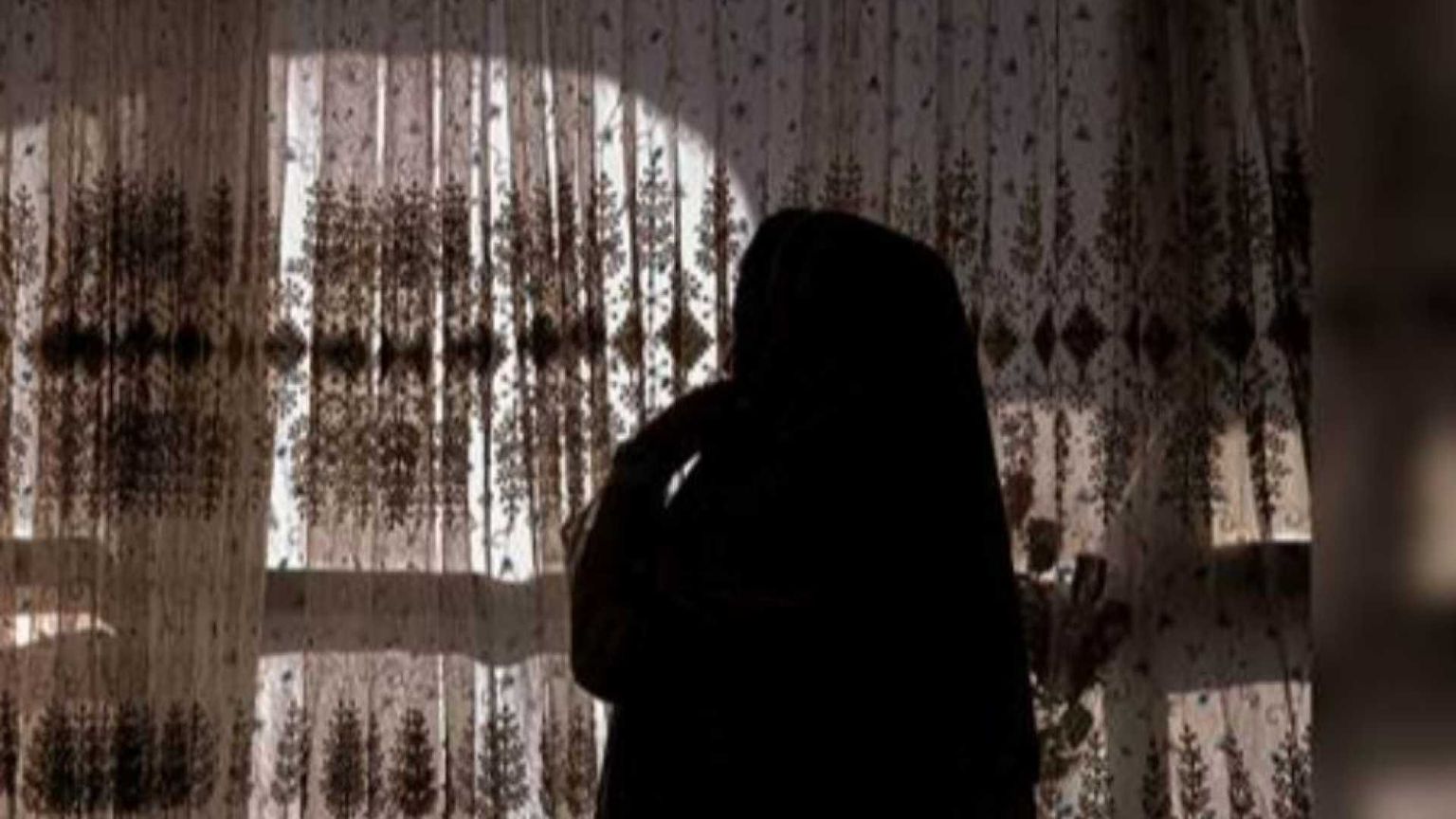
Shafiqa (pseudonym), a 16-year-old girl, was married off two years ago to a 46-year-old man—a man she neither knew nor had the opportunity to get to know.
At just 14 years old, her life took a path that bore no resemblance to her childhood dreams of becoming a doctor. While she was still thinking about her aspirations, she was forced to marry a man much older than herself.
“It was winter two years ago when they came to propose. My husband is much older than me, but my father was blinded by wealth and money and paid no attention to my future. After just one proposal, he accepted the deal and decided to marry me off to a man as old as he is.” Shafiqa said.
Shafiqa was in the seventh grade when the Taliban took control of Afghanistan and shut down schools for girls above the sixth grade. She stated that she used to rank first in her class every year until the Taliban's restrictions on education gave her father an excuse to force her into this marriage.
"My father ignored my tears as if I were nothing more than an object to him, as if I were not his daughter."
Shafiqa, a resident of Sheberghan in Jawzjan Province, claims that her family married her off to a man 30 years older than her in exchange for two and a half jeribs of agricultural land.
According to new data from the United States Agency for International Development (USAID), 28.7% of girls in Afghanistan between 2020 and 2024 were married before the age of 18, with 9.6% of these marriages occurring under the age of 15.
The Special Inspector General for Afghanistan Reconstruction (SIGAR), another U.S. oversight body, reported that child and forced marriages in Afghanistan have increased by at least 35%, correlating with the Taliban's school closures.
Now seven months pregnant, Shafiqa recounts how she was sent to her husband's house just one month after the engagement, without any wedding ceremony:
"It was in the afternoon when they brought a mullah, invited a few male and female relatives—probably no more than 20 people—and held the wedding. Without a bridal gown, wearing only a red velvet dress I already owned, they married me off and sent me to my husband's house." Said Shafiqa.
Yasmin (pseudonym), a 17-year-old girl, says that three years ago, under family pressure, she was married to a 32-year-old man. She was only 15 when she was forced to accept this decision, hoping that the marriage might improve her family's financial situation.
This teenage girl, who still lives with her father’s family in Injil district on the outskirts of Herat, says that her husband was supposed to pay 650,000 Afghanis ($8,898.50 USD) as a dowry, However, he has only managed to pay 300,000 Afghanis ($4,065 USD.) so far.
Yasmin explains that her husband works as a street vendor, collecting scrap metal, stale bread, and plastic waste. According to her, he struggles to provide for his first family, and paying the remaining 350,000 Afghanis of the dowry seems impossible for him.
With worry evident in her eyes, she says, "He begs from others to send money. My husband always says that if he can't pay the dowry, he will have to take out a loan. This situation has led to his family constantly reminding me that I failed to negotiate a lower dowry." Yasmin told.
However, according to Yasmin, her father insists, "I will take every last pence of the dowry and spend it on the household."
Yasmin spends most of her time alone in her room. For the past year, she has been receiving treatment at the government-run psychiatric hospital in Shedayee, Herat, and takes (Anvisert 50 mg) medication.
"Most of the time, I sit alone, feeling sad. I can’t sleep and struggle with mental health issues. Sometimes, I experience anxiety attacks, and on a couple of occasions, I temporarily lost the ability to walk.” She said.
Meanwhile, the fate of Yasmin and her five sisters is strikingly similar—child marriage. She explains that her father, who suffers from liver cancer and is unable to work, has been covering the household expenses by marrying off his daughters.
"All five of my sisters were married off as children—either by having a scarf tied around their heads or as young as five or six years old—but none of them are happy. One of my sisters returned to our home 25 nights ago, and her husband hasn’t even called her once to ask if she is alive or dead."
The latest image of poverty in Afghanistan comes from a report by the United Nations Office for the Coordination of Humanitarian Affairs (OCHA), which states that one in every two Afghan citizens is affected by poverty.
Reports on poverty in Afghanistan, especially in the western part of the country, have been published before. For instance, years ago, Agency France-Presse (AFP) released a shocking report stating that poverty had forced some families in western Afghanistan to sell their daughters for survival. That report depicted a situation from several years ago, whereas the current state of poverty in Afghanistan has worsened significantly since its publication.
Marwa (pseudonym), a 15-year-old girl, was engaged to a 21-year-old man three years ago under family pressure. She was only 12 years old when she was forced to accept this decision, pressured by her mother and hoping that marriage might improve her family's financial situation.
She explains, "Our family's financial situation was extremely bad—sometimes, we had no food at all for the night. In those difficult times, my mother suggested that I get married, thinking it might help improve things."
Marwa, who had agreed to the marriage in the hope of gaining financial stability, now says that her fiancé’s family is also struggling financially and cannot provide sufficient support to her family:
Now, due to concerns about her future, she is uncertain about the marriage. She mentions that her fiancé is unemployed and, instead of working towards building a future, spends time with a group of "aimless young men."
"No matter how much his father tells him to find a job and think about his future, I know he is not serious about work, marriage, or family. Days pass without me hearing anything from him."
Meanwhile, Rukhshana Media, in collaboration with The Guardian, reported that the Taliban forced a 19-year-old girl in Kabul to marry a man who owned a carpet-weaving business.
Taliban morality police raided a carpet workshop last summer, where Samira, after three months of exhausting labour, had gone to collect her wages. The Taliban insulted and cursed her, took her to a security station, and forced her to marry the workshop owner, who already had two children.
Samira 19 has been deprived of education. Until six months ago, she lived with her family in District 13 of Kabul. Recalling the day that changed her life forever, she says:
"I hadn’t even finished the cup of tea my employer insisted I drink when four men in white robes, with long trousers and harsh faces, stormed into the office. I froze in fear. They started questioning me—'Who is this man to you? Why are you alone here? What are you doing here?' One of them yelled, 'Shameless girl! I’m talking to you—why are you with an unrelated man?'"
When her repeated objections led nowhere, she turned to death as her final option and ended her life. Mursal, a 22-year-old girl from a district in Faryab province, northern Afghanistan, took her own life after being forced to marry a man she did not love.
"When I woke up in the morning, I thought she was asleep. I went to clean the house and then returned to her room, but she was still sleeping. I tried to wake her up, called her name twice. I got closer and shook her firmly, but she didn’t move. Her entire body was cold and lifeless, and her face had turned pale. I panicked and screamed."
These were the words of Farzana, Mursal’s 25-year-old older sister.
A year before her death, in the spring of 2023, Mursal was forced into marriage with a man who was one of her father’s "closest friends."
Farzana recalled, "On the day they formalized the engagement, she cried a lot. She begged me to do something to stop the engagement, but I couldn’t do anything. My father never cared about what my mother or I had to say. His decision was final. He told Mursal that if she refused the marriage, his friendship with the man would be ruined."
Note: This report is based on information gathered by my colleagues from different provinces across Afghanistan.
This article has been produced in collaboration with Rukhshana Media, a platform focused on women's issues in Afghanistan. Rukhshana is one of the few media outlets that specifically covers the situation of women. It was founded in 2020 by Zahra Joya, an Afghan journalist. Due to her professional work, Zahra has received multiple international awards and was named Woman of the Year by Time magazine in 2022. Currently, all journalists working for this media outlet inside Afghanistan operate under pseudonyms and in secrecy due to security threats.
© RIPRODUZIONE RISERVATA